World News
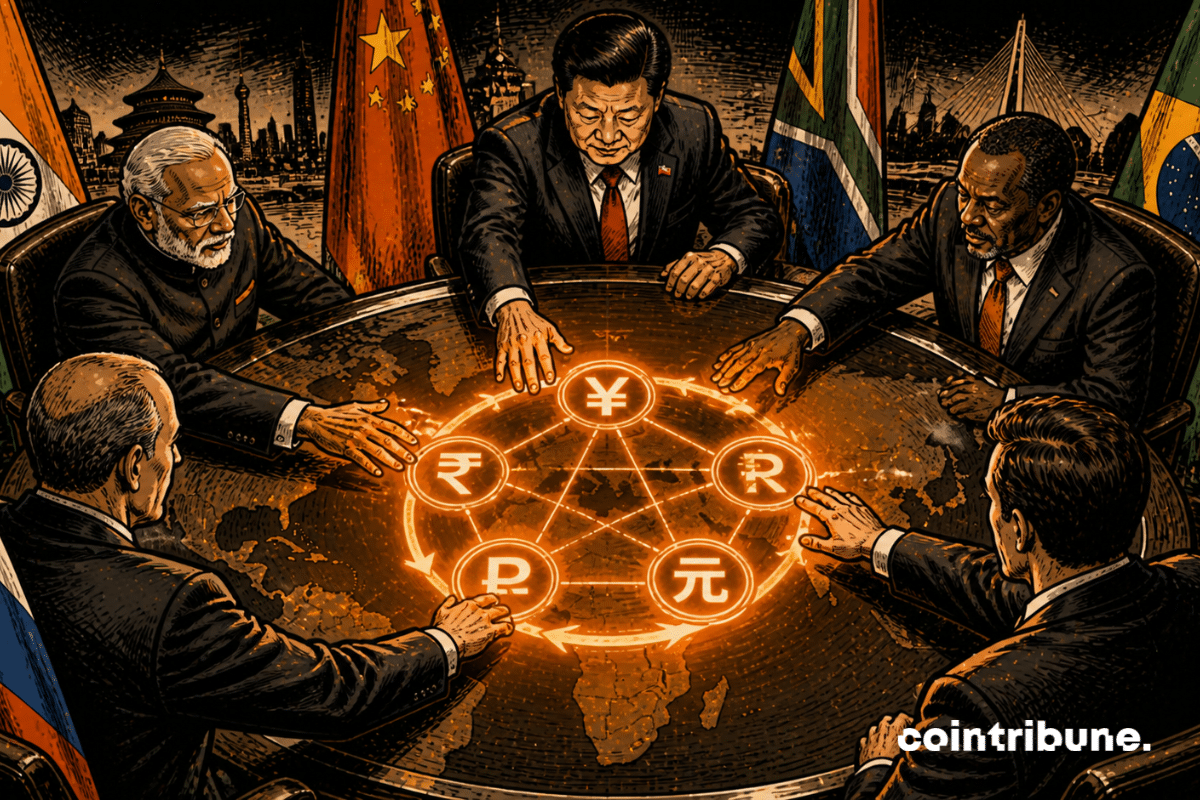
The dollar dominates international trade, but its monopoly is weakening. Amid geopolitical tensions and Western sanctions, the BRICS are accelerating their strategy to break free from it.

Iran’s currency has fallen to its weakest level on record, extending a prolonged depreciation trend that has developed alongside intensified U.S. economic measures.
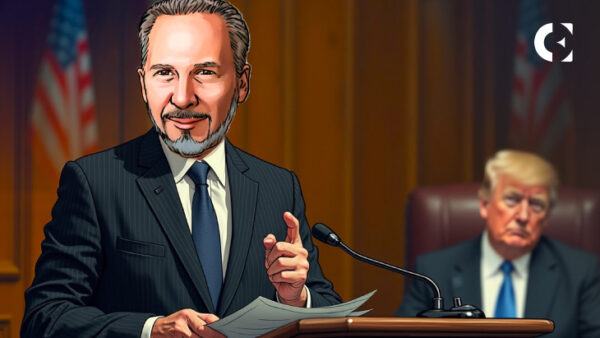
Bitcoin critic and gold advocate Peter Schiff did not hold back Thursday. President Trump has assured Americans that gas prices will drop sharply once the Iran war ends. Schiff’s response cut straight to the problem.
The U.S. Senate unanimously adopted a resolution banning senators, their staff, and chamber officials from betting on prediction markets, including Kalshi and Polymarket. The decision comes after the indictment of a U.S.
The United States Senate passed a unanimous resolution Thursday banning its members and staff from trading on prediction markets, responding to a series of insider trading scandals that have put the fast-growing industry under intense scrutiny in recent weeks.
The US Senate unanimously passed a rule banning members and staff from prediction markets, with a similar resolution set to be introduced in the House.
Robert Kiyosaki says a 2026-27 market crash could reward prepared investors willing to buy discounted assets. The Rich Dad Poor Dad author cited past downturns where he profited, including crashes in 1987, 2000, 2008, 2015, 2019, and 2022.
A group of congressional Democrats sent the Commodity Futures Trading Commission (CFTC) a letter on Thursday demanding the agency issue rules banning event contracts on elections, war, military actions, sports, and government actions without an economic…
U.S. President Donald Trump has shifted toward a prolonged economic confrontation with Iran, directing aides to prepare for an extended blockade that targets Tehran’s oil lifelines and financial reserves.
The United States Senate took decisive action on Thursday to prevent lawmakers from wagering on the very outcomes they influence by unanimously passing a resolution to ban sitting senators from participating in prediction markets. Key Takeaways: Sen.
S. Res. 708 prohibits senators and staff from using prediction markets, and became effective immediately upon passage.
Japan intervened in the foreign-exchange market to support the yen, sending the currency up as much as 3% intraday, according to traders and local media.
U.S. initial jobless claims fell last week, indicating continued stability in the labor market despite geopolitical tensions. The Labor Department reported 189,000 new claims for the week ending April 25.
Australia moved a step closer to its vision of a high-level account-to-account (A2A) payments system with the release of a draft report for industry stakeholder feedback.
The US Federal Reserve left interest rates unchanged at 3.5% to 3.75% after its April policy meeting, matching market expectations. This was the third straight meeting with no change in rates.
Tensions are rising around the Strait of Hormuz after Trump refused to accept an Iranian proposal to reopen the maritime route before any progress is made on the nuclear issue. This position keeps pressure on Tehran and is already shaking global markets.
Federal Reserve Chair Jerome Powell announced on Wednesday that he will remain on the Fed’s Board of Governors after his chairmanship ends May 15, a decision rooted in a Justice Department probe and the politics of central bank independence.
Eleanor Terrett reported on X that Senator Thom Tillis is ready to push the CLARITY Act toward a markup after lawmakers return from recess.
Oil prices moved higher on Wednesday after reports said the U.S. prepared for a longer blockade of Iran’s ports. Brent crude climbed above $117 a barrel, extending its rise from just over $110 on Tuesday evening.
The Federal Reserve held its benchmark interest rate unchanged on Wednesday, with the Federal Open Market Committee voting to keep the federal funds rate in a target range of 3.5% to 3.75% amid elevated inflation and growing global uncertainty.
President Donald Trump directed aides to prepare for an extended naval blockade of Iranian ports, pushing Brent crude above $115 per barrel on April 29 and widening what the International Energy Agency called the largest supply shock on record.
The Senate Banking Committee voted 13-11 along party lines Wednesday to advance Kevin Warsh’s nomination as the next chair of the Federal Reserve, sending the pick to the full Senate for a final confirmation vote.
On April 28, the United Arab Emirates announced their withdrawal from OPEC after 59 years of membership, a major turning point for the global oil balance. In the aftermath, bitcoin sharply dropped below $76,000, erasing part of its recent gains.
CFTC Chair Mike Selig has vowed to sue any state that attempts to regulate prediction markets under its own gambling laws.
On April 28, 2026, the United Arab Emirates (UAE) Ministry of Energy officially announced its withdrawal from both OPEC and the broader OPEC+ alliance, effective May 1, 2026, ending 59 years of membership.
South Korea’s tax agency has recovered 33.9 billion won, or about $23 million, in unpaid taxes by tracking down hidden overseas assets, marking one of its most aggressive cross-border enforcement pushes to date.
The U.S. Commodity Futures Trading Commission (CFTC) filed a federal lawsuit against Wisconsin on Tuesday, directly challenging the state’s attempt to shut down prediction market platforms operating under CFTC oversight.
Iran has put forward a new proposal that shifts the immediate focus from its nuclear program to the Strait of Hormuz, offering to reopen the waterway if the United States lifts its naval blockade on Iranian ports and agrees to end the war.
The Federal Reserve is set to announce its April 29 policy decision, and markets already expect no change in interest rates. Traders are fully pricing in a hold at 3.50%–3.75%, with near certainty that policymakers will keep rates steady.
The United Arab Emirates officially withdrew from OPEC and the broader OPEC+ alliance on April 28, 2026, and bitcoin fell below $76,000 within hours of the announcement.